
Burton, Benjamin Howell, Jr.
- Who
- WWI driver
- When
- WWI
- Where
- France
- Education
- Belmont, Calif. Mil Sch; Univ. of California
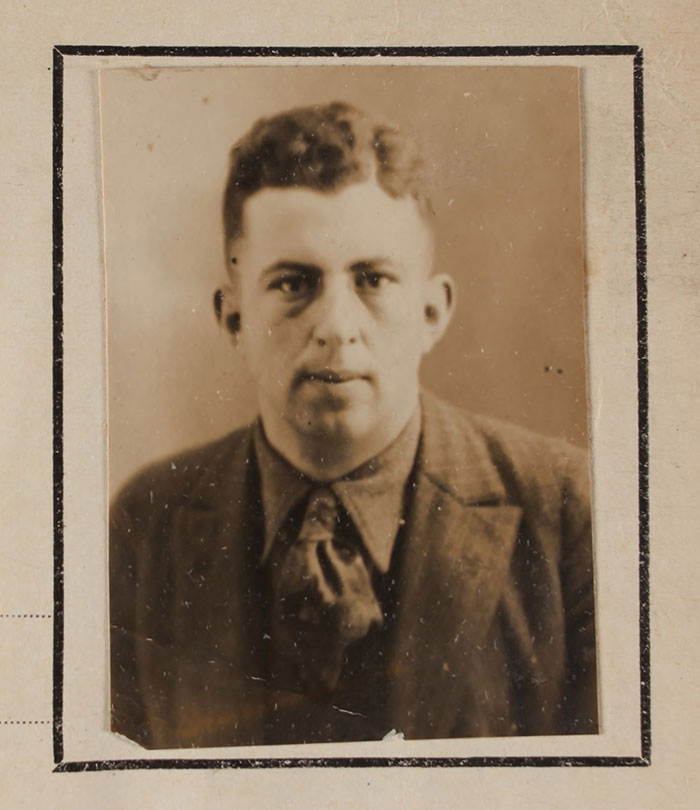

Born June 1, 1896, in Willows, Glenn County, California. Son of Benjamin Howell and Anna T. Burton. Home, Colusa, California. Educated Colusa Grammar School; Belmont, California, Military School; and University of California, Class of 1918. Joined American Field Service, May 19, 1917; attached Transport Section 133 to November 16, 1917. Enlisted U. S. Field Artillery. Commissioned Second Lieutenant; attached Motor Battery. Died September 18, 1918, under ether, of larnygeal oedema, during operation at Base Hospital, Toul. Buried American Cemetery, Toul, Meurthe-et-Moselle. Body to be transferred to Willows, Glenn County, California.
WHEN two-score students in the University of California offered their services to France, one of the most enthusiastic supporters of the abstract idea, as well as a leader in the actual organizing of the college unit for the American Field Service, was Benjamin Howell Burton, junior.
It is difficult for anyone not a native of the Pacific states to appreciate just how distant from America the war seemed to them in its early days. It required time and much urging from within to stir their sympathies and to awaken a realization of their inherent obligation in the cause of France. It is remarkable then to find among western youths a strong spirit which found expression in such sacrifice as that of "Ben" Burton's.
Not yet of age when war came and in his third year of college, he laid aside his books, and joined eagerly in arranging for the enlistment of his group in the Field Service. As eagerly, when they arrived in France, he entered into that work which promised most immediate action, becoming a driver in Camion Section 133 of the Mallet Reserve. With Section Erhardt, of Groupement Périsée, he began his training at Chavigny Farm, the camion center, north of Soissons. Later the Section made its home at Jouaignes, south of the Vesle. Here, as throughout his military experiences, "Ben" did his part and strengthened that estimate of his character which appears in the words of a California judge who speaks of his "reputation for honesty, integrity, industry, and sobriety . . . . . high principles and ideals." "A good specimen of young manhood," Oscar Robinson, President of the Board of Trustees of Colusa, had called him when he volunteered. And to the end he set an example for young American manhood.
Young Burton was given the French War Cross in November, 1917, for conspicuous bravery "en contribuant à dépanner deux camions sous un violent bombardement qui fit deux victimes à ses côtes." His own letters made slight mention of the affair, but a fellow camionneur described it laconically in a letter: "The other night they sent us up one deuce of a steep hill about half a mile from the first trenches and that is close for our big trucks. The roads were slippery and full of shell-holes, which made driving fierce. About nine cars got stuck in the ditch and were all pulled out except one ---'Ben' Burton's and 'Herb' Hope's. They had to stay all night in the cold and rain. In the morning the Boche saw them and began throwing in four-inch shells. Two Frenchmen were killed near them, but the California fellows got out O. K. --- mighty lucky."
When the Transport Service was taken over by the American Army in the fall of 1917, Burton enlisted in the United States Field Artillery. After training, he was commissioned a Second Lieutenant, and assigned to an active command. On September 15, 1918, just as he was starting for the front, a terrible toothache came on, and hoping to continue immediately with his reentry into action, "Ben" underwent an examination in Toul. An operation was decided upon at Base Hospital 45, and ether administered. Young Burton never came out of this anesthetic, however, and on September 18th he died of laryngeal oedema.
His is one of those deaths which seem cruelly inappropriate for a vigorous youth --- for one who had already served with the French armies and been cited for bravery. Yet for one of "Ben" Burton's fine spirit, the manner of dying - as the glorious climax of battle or unglorified in a hospital at the rear --- could matter but little --- since it was for his country and his ideals.
- Tribute from Memorial Volume of the American Field Service, 1921
WWI File
- Months of service
- 6, 1917
- Section(s)
- T.M.U. 133
- Home at time of enlistment
- Colusa, Cal., USA
- Subsequent Service
- 2nd Lt. U.S.F.A
Decoration(s) received while a volunteer with the Field Service
- Croix de Guerre (1914-1918)