
Carkener, Stuart, 2nd
- Who
- WWI driver
- When
- WWI
- Where
- France
- Education
- Princeton
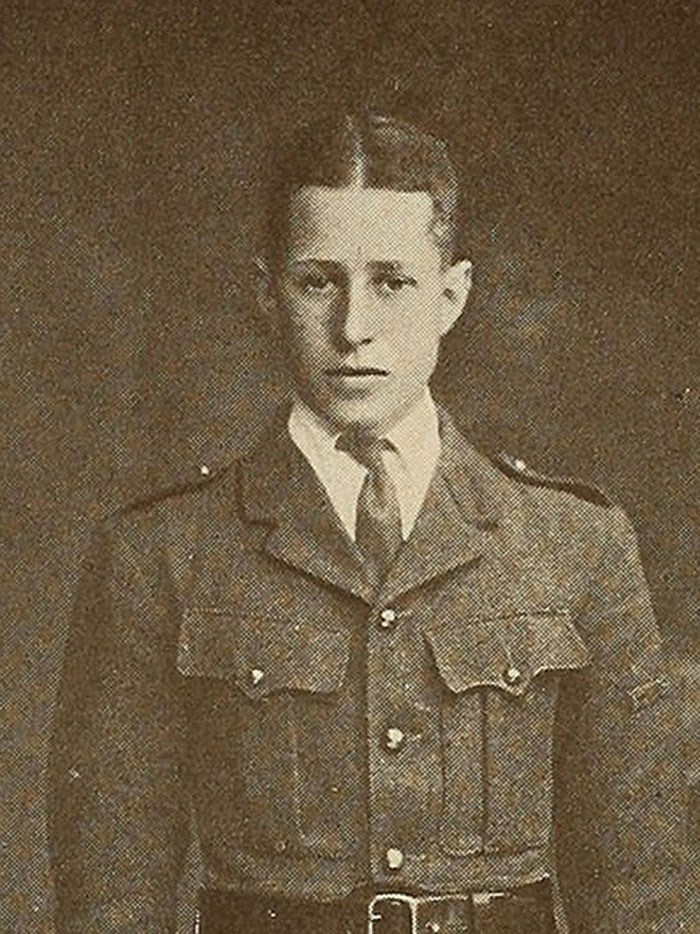
Born June 24, 1897, in Boulder, Colorado. Son of George S. and Nell Evans Carkener. Home, Kansas City, Missouri. Educated grade schools and Country Day School, Kansas City, and Princeton University, Class of 1919. Joined American Field Service, May 26, 1917 ; attached Transport Section 133 to November 17, 1917. December returned to America. Enlisted in U. S. Field Artillery, 76th Regiment, as private. To France, April, 1918. Promoted to Corporal. Killed by shell, July 30, 1918, near Ronchères, northeast of Château-Thierry. Buried Villadale Farm, near Ronchères, Aisne. Body transferred to Belleau Cemetery, Aisne, and to rest ultimately beside his mother in Forest Hill Cemetery, Kansas City, Missouri.
STUART CARKENER, 2D, said in his last letter to his family, "Whatever you do, don't worry about me, as I can assure you that every time I hear a shell coming my way I soon find some safe ditch." Just four days later, however, when it. became necessary to deliver an important message from an advanced observation post, he did not hesitate to leave his "safe ditch," but struck out calmly across the cornfield where, midway, he was mortally wounded by an exploding shell. The 4th U. S. Infantry had been held up by German machine guns. Corporal Carkener and his two companions had located the nest by successful reconnoissance, and he and one companion decided to risk the journey rearward to carry the information. They left, wrote the sergeant who stayed in charge of the post, with terrible matter-of-factness, "thinking that one of them, possibly, could get through all right! " But neither one arrived!
At Princeton Stuart played on his freshman and varsity soccer teams, and has been described by a classmate who retains a vivid impression of him, as "attractive, popular, and congenial, with a friendly word for everyone."
In May, 1917, he sailed for France in the American Field Service where he served for six months in the camion branch, driving in one of the trains of trucks that delivered shells from the railroads to the batteries before and during the great battle of the Chemin des Dames. His letters were clear and vivid, characterized above all by their refreshing honesty and freedom from heroics. He was always careful to verify everything about which he wrote, and in his desire to prevent his family from worrying he went almost to an extreme in minimizing the danger.
In December, 1917, he returned to the United States and made plans to enter service in our Army. It was his determination to return to France immediately, and he declined to make any effort to enter officers' training camps in this country, for which, by his education and experience, he was well fitted. After looking the situation over he enlisted in the 76th Field Artillery, being advised that this regiment was to be among the next to sail. In April, 1918, he embarked for France a second time. After three weeks of training, his regiment, on the night of July 14th, found itself in a little village not far from Château-Thierry with the German barrage roaring and crackling about their heads. The casualties were great that night owing to the lack of shelter, and Corporal Carkener, for he had received his promotion during the period of training, was obliged to work "as stretcher bearer, trench and grave digger" for twenty hours, during eight of which he wore a gas mask. Then came the Allied advances, of which he wrote, "They mean all sorts of work for us, but as long as they are in the right direction you can bet we don't mind the extra hardship," and at that point we must piece on the story of that heroic sacrifice in the cornfield.
Of the many tributes that have been paid to Carkener, he himself would have probably valued most that which came from his sergeant, a man whom he never would have met but for the accident of war, and who wrote to Stuart's father, "He was a sort of a quiet lad, a very entertaining talker, and he was forever helping some one to figure out problems. Every one in the outfit missed him just because he was a 'regular fellow.' Your son did his bit, Mr. Carkener, and he died with his boots on just like every soldier wants to die."
No true soldier could wish a higher fame than the words above his grave.
"Glorieusement mort au champ d'honneur face à l'ennemi, le 30 juillet 1918, Stuart Carkener II, soldat américain."
- Tribute from Memorial Volume of the American Field Service, 1921
WWI File
- Months of service
- 6, 1917
- Section(s)
- T.M.U. 133
- Home at time of enlistment
- Kansas City, Mo., USA
- Subsequent Service
- Corp. U.S.F.A.