
Elliott, William Armstrong
- Who
- WWI driver
- When
- WWI
- Where
- France
- Education
- Univ. of California
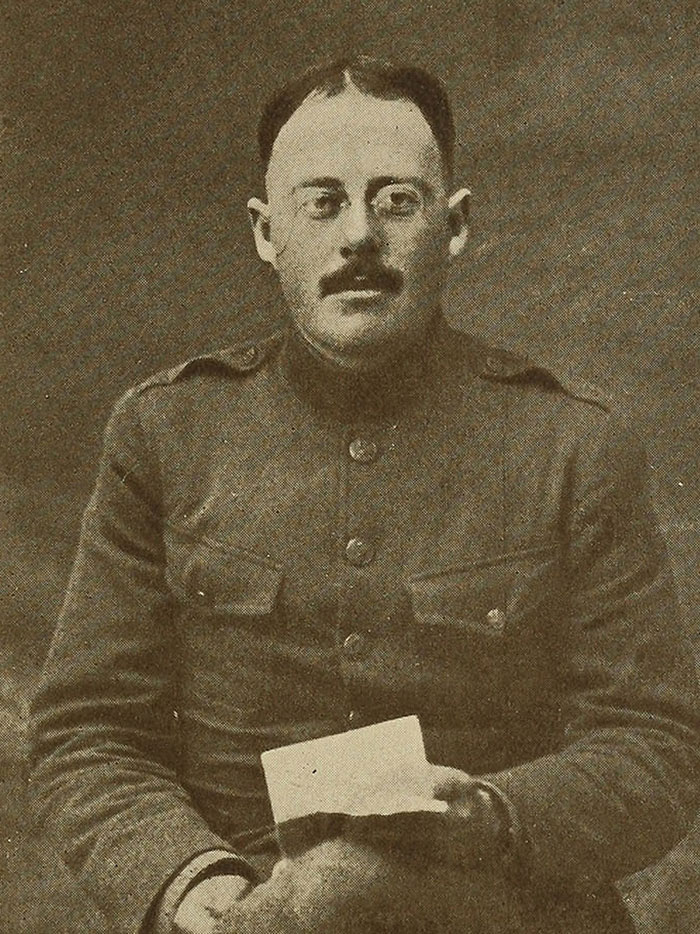
Born January 22, 1896, in Moab, Utah. Son of judge C. J. and Mildred J. Elliott. Home, Oxnard, California. Educated Oxnard schools and University of California, Class of 1918. Alternate years at college and working with state and county highway commissions as engineer. Joined American Field Service, May 19, 1917; attached Transport Section 133 to November 17, 1917. Civilian engineer and inspector, Construction Department, U. S. Air Service, Romorantin. Recommended French Artillery School but remained at Pauillac with U. S. Naval Aviation. Died September 4, 1918, of typhoid fever, U. S. Naval Hospital Beaucaillon. Buried Naval Cemetery Pauillac, Gironde.
NOT content with being merely useful as a civilian engineer in one of the largest flying fields in France, William Armstrong Elliott of T. M. U. 133 felt the urge for combat work so keenly that he submitted to an operation to make him physically fit for actual flying. Immediately following the operation, typhoid fever set in and Elliott died in the Naval Hospital at Beaucaillon, France, September 4, 1918.
In appreciation of his fine sense of duty, the navy buried Elliott with full honors. "His funeral was attended by the officers and men of my command," wrote Commander F. T. Evans to Elliott's mother, "For although not a member of the military forces of the United States your son had indeed become a comrade in arms and has given his life in the service of the country he loved."
Elliott was born January 22, 1896, in Moab, Utah. He moved with his parents to Oxnard in California, in 1899. There he lived until 1912, when he entered the University of California. In the spring of 1917 he joined one of the university ambulance units leaving for volunteer service in France.
At the end of his enlistment with the American Field Service in November, 1917, Elliott became inspector in the construction department of the air service at Paris, and shortly after was sent to Romorantin to assist in the building of an industrial center for the aviation branch of the army. In June, 1918, with the pressure of the German offensive steadily growing, he obtained permission from his commanding officer to go to the French Artillery School where he was anxious to get the training which would send him again to the front. Major Bates, in recommending him to the school wrote: "He desires to obtain permission to enter your school to receive training for the artillery branch of your service with the hope that he can obtain a commission in the French Army. You will find this man an exemplary, clean cut, honorable gentleman, in whom you can place every confidence."
While at Fontainebleau he received a call from the naval aviation service. At Pauillac, where he was assigned, Elliott soon found himself again in construction work in the rear. His urge to get into more active service steadily growing, Elliott consulted the medical authorities there. He learned that an operation was necessary before any army or navy would accept him, particularly for artillery. He made arrangements at once to enter the hospital, from which he never returned.
On learning of his death Major Bates wrote to Elliott's mother, "Our association together was one of the brightest periods of my long service, and I want to say to you in all candor, your son was one of the most honorable of men, and it was a real pleasure to be associated with him in our work, which was the most important in the air service in all France. Please accept my sincerest sympathy in your great bereavement. I mourn with you in your loss of your dear son and my friend and comrade."
- Tribute from Memorial Volume of the American Field Service, 1921
WWI File
- Months of service
- 6, 1917
- Section(s)
- T.M.U. 133
- Home at time of enlistment
- Berkeley, Cal., USA
- Subsequent Service
- Civ. U.S. Nav. Av.