
Freeborn, Charles James
- Who
- WWI driver
- When
- WWI
- Where
- France, USA
- Education
- Westminster; Sheffield Scientific School; Yale '89
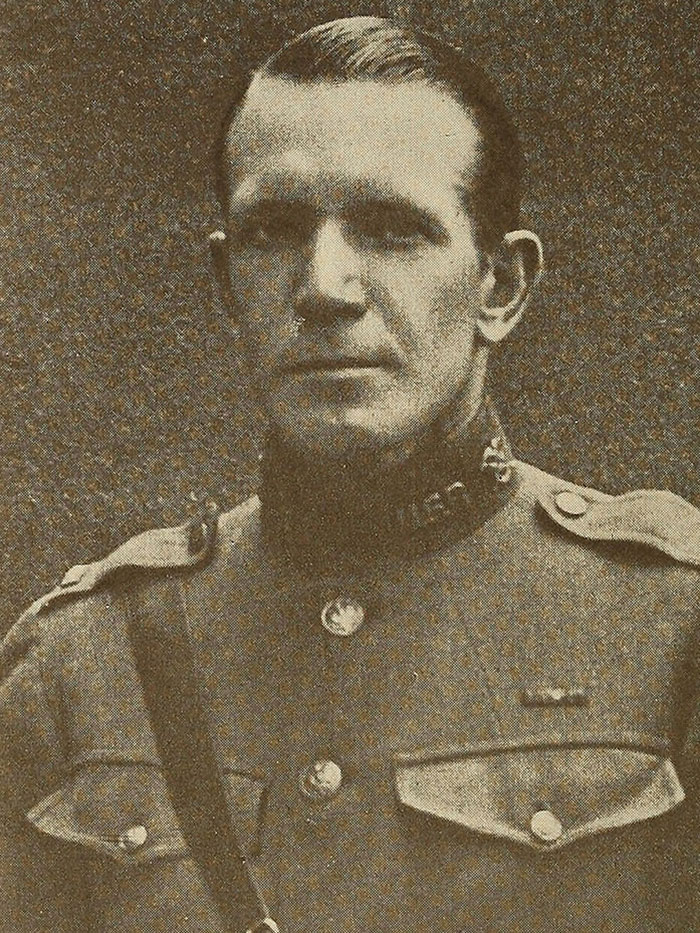
Born November 11, 1877, in San Francisco, California. Son of James and Eleanor Smith Freeborn. Educated San Francisco Schools, Westminster School, and Sheffield Scientific School, Yale University, Class of 1899. Director Freeborn Estate Corporation. Joined Ambulance Service, Neuilly, 1914; helped organize "Paris Squad." Joined American Field Service, 1915, as Assistant to Inspector General; recruited in America, 1916; attached Section Two, March 31, 1917, as Chef Adjoint to September, 1917. Croix de Guerre. Enlisted U. S. Army, Intelligence Department. First Lieutenant, July, 1918. Liaison Officer, French G. H. Q. Promoted to Captain. Légion d'Honneur. Died of influenza, February 13, 1919, in Paris. Buried in Mountain View Cemetery, Oakland, California.
"CHARLEY" FREEBORN ---somehow we always called him "Charley" although he was a good deal older than most of us --- was the sort of friend that only a young American who has left home for the first time to cross the ocean and serve in a foreign army can really appreciate. Whether you joined his Section at the front, or whether you came in contact with him when he was on duty at Headquarters in Paris, he had a man's way of making you feel at home and helping you over the rough spots of your new environment and filling you with a sense of what it all meant. A thorough American himself, he, at the same time, loved France devotedly and felt that no sacrifice in her cause was too great.
In England at the time of the First Battle of the Marne, he crossed, in December, to France to drive an ambulance, unable longer to remain merely a spectator. Speaking French perfectly, a competent chauffeur, and, above all, a tireless worker, he and a group of his friends rendered valuable assistance to the hard-pressed hospital authorities. He threw himself whole-heartedly into the work of the American Ambulance at Neuilly, helping organize what became eventually the Field Service. Of his aid at that time Colonel Andrew has written as follows:
"In the early days of the War, when the Field Service was in its frail infancy, and its friends were doubly appreciated because so few, Charles Freeborn was one of those whom we particularly valued because we could count implicitly upon his loyalty and upon his readiness to undertake whatever he was asked to do. Although no longer a boy, and although long accustomed to a life of ease and comfort, he accepted willingly whatever hardships were involved in the varying details to which he was assigned. I recall particularly the winter of 1915-16, when he was in charge of a detachment of ambulances at Revigny, and how uncomplainingly he lived for weeks in the cold and filth of a ruined stable, scarcely fit for the cattle with which his detachment shared their quarters. I cannot forget, either, how he voluntarily crossed the ocean and went all the way to California in the following summer to carry our moving pictures of the Service to the people of that State who then were but little aware of the significance of the war."
On returning to France he was given command of Section Two, then operating in the Verdun sector. He remained with this Section until the summer of 1917, gaining the respect of all his men and making in every way an excellent leader.
When America came into the war he was commissioned a First Lieutenant, quickly promoted to the rank of Captain, and given an important post in the American Mission attached to French G. H. Q. His discretion, his knowledge of French, and his long experience in the War, especially fitted him for this delicate work which he performed so well that he received the cross of the Legion of Honor.
About the middle of January, 1919, he was demobilized, and while at his mother's home in Paris, died from an attack of influenza.
"Charley" Freeborn was always unusually uncommunicative about the fine things he did. Only his wartime friends know the full value of his services. "Don't throw any flowers at me. We are all parts in a big machine," he once wrote in reply to a warm letter of commendation. Nothing could have been more characteristic than that of the modest way in which, from December, 1914, to the end he did his duty in the war.
- Tribute from Memorial Volume of the American Field Service, 1921
WWI File
- Rank
- Assistant to Inspector-General
- Months of service
- 1915-17
- Section(s)
- S.S.U. 2
- Home at time of enlistment
- Paris, France, France
- Subsequent Service
- (Capt.) Liaison Officer at Fr. G.H.Q.
Decoration(s) received while a volunteer with the Field Service
- Croix de Guerre (1914-1918)