
Tyson, Stuart Mitchell Stephen
- Who
- WWI driver
- When
- WWI
- Where
- France
- Education
- Oxford (England); Haverford
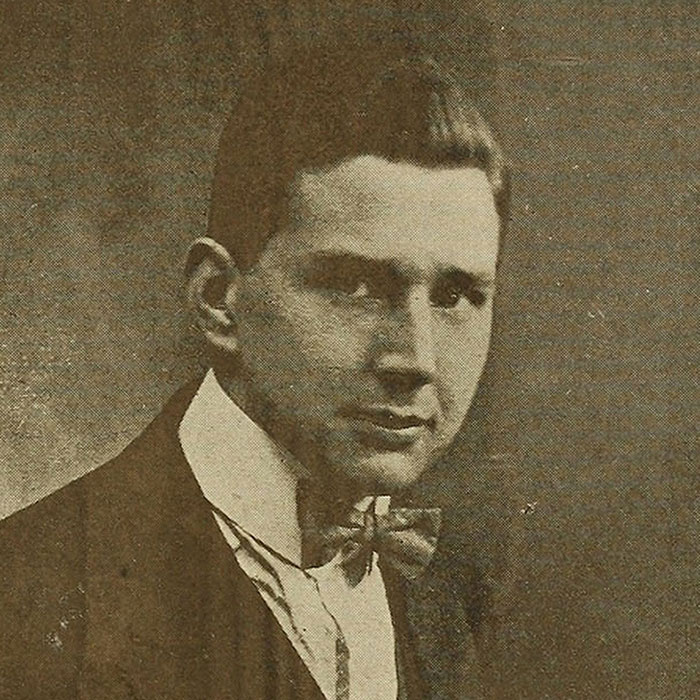
Born March 12, 1898, in Milwaukee, Wisconsin. Son of Reverend Stuart L. and Katharine Rosengarten Tyson. Home, Princeton, New Jersey. Educated school in Oxford, England, and Haverford School, Pennsylvania. Midvale Steel Company, 1915. Joined American Field Service, October 14, 1916; attached Section One until April 14, 1917. Enlisted French Aviation, May 15th. Trained Avord, Pau, and Plessis-Belleville. Breveted October 16, 1917. Attached Spad Escadrille 85, December 19, 1917, Sergent. Killed in action, July 19, 1918, near Dormans. Croix de Guerre, with palm. Buried in France.
WITH a courage and a conviction characteristic of so many of our American soldiers, Stuart Mitchell Tyson gave his life to France and her Cause willingly, consciously, considering it a privilege. It was his final protest against a world wrong --- it was his glorious consecration to the simple faith that Right is Might in a christianized world. Literally, and confidently, he "died to make men free."
Sergeant Tyson was born in Milwaukee, Wisconsin, March 12, 1898. He was educated at a school in Oxford, England, and at the Haverford School, Pennsylvania. In 1915 he entered the Midvale Steel Company. A year later he left for France as an ambulance driver, serving with Section One along the Verdun front in the hard winter of 1916-17 when the French division, with which it served, was engaged in the recovery of Vaux and Douaumont. At the end of six months he enlisted in the French Army as an aviator, and after the necessary period of training was breveted, and sent to the front in December, 1917, where he served with the Esquadrille Spad 85 until July 19, 1918, the day of his death. He was killed in action near Château-Thierry, while attacking eight German monoplanes. In recognition of his heroism he received the Croix de Guerre with palm.
The following extracts from letters to his father are characteristic of the spirit of this man. On May 1, 1917 he wrote: "I am delighted with my work here, in the ambulance service, and am wrapped up in the cause of France. I have decided to give myself to her . . . . . Knowing your sentiments on the war, I am sure you will have no objections to my doing what little I can for France. Dear Father, I realize that my chances for getting through are pretty slim, but it is well worth it by my having a chance to help crush those devils."
And just a year later, May 1, 1918, he writes from the Aviation Service, "We have been constantly moving from place to place, and are now right in the thick of the big battle. What a sight it is, seen from the air. The endless train of men and supplies coming up from the rear, the narrow strip of No-Man's Land with its cloud of smoke and fire caused by the never ceasing rain of shells, and above, the German planes circling, in and out of the clouds, like great birds waiting for a chance to strike. Our group has been assigned to shooting up the German column as they march up from the rear. We fly very low, so you can imagine what two machine guns on each aeroplane, flying full in the face of the enemy, can do. It is very exciting work. We are in the trajectory of shells from both sides, with anti-craft guns shooting up. I have had awfully good luck. Not been touched yet, although my machine has been badly hit twice."
An appreciation from his commanding officer attributes to him all of the highest qualifications of a real man and soldier.
"Stephen Tyson was a brave and capable pilot, always ready to do more than his duty, and was beloved by all his comrades in the Esquadrille."
- Tribute from Memorial Volume of the American Field Service, 1921
WWI File
- Months of service
- 6, 1916-17
- Section(s)
- S.S.U. 1
- Home at time of enlistment
- Haverford, Pa., USA
- Subsequent Service
- Sgt. French Aviation