
The Red Cross
- Creator
- AA
- When
- Roots
- Where
- Europe
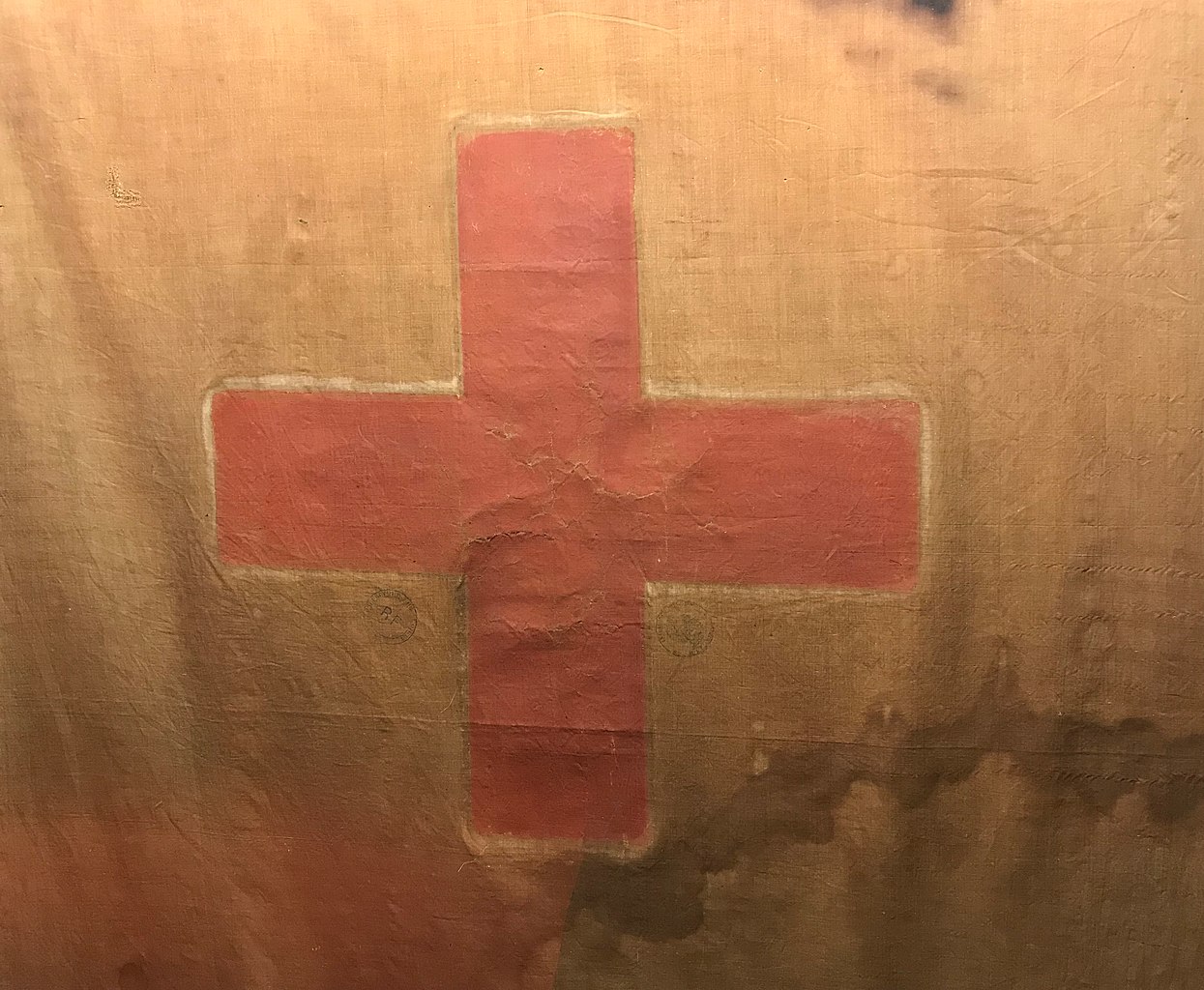
The Red Cross
International Societies for Assistance to the War Wounded
The example of Florence Nightingale, along with that of other proponents of Anglo-Saxon, Protestant idealism (Harriet Beecher Stowe, Elizabeth Fry),had a profound effect on Henry Dunant (1828-1910). Dunant, raised in the tradition of Swiss Protestantism (and having already initiated a movement which would lead to the creation of the Young Men's Christian Association),would unexpectedly find himself in the role of the Good Samaritan, having happened upon the great battlefield of Solferino in the summer of 1859.
This self-described "passing tourist" from Geneva, found himself suddenly confronted with the suffering of innumerable wounded soldiers.In the virtual absence of medical assistance, Dunant did the best he could.His impassioned description of the experience, Un souvenir de Solferino,shook the consciences of Europe.
The sun of June 29, 1859 shone down on one of the most horrible sights one could imagine. The battlefield was strewn with the dead bodies of men and horses, spread out like seeds along the roads, in the ditches, the ravines, the bushes, the fields, especially in the vicinity of the village of Solferino.
[45 pages of description follow]
But why recall so many scenes of suffering and desolation, thereby causing such distressing emotions? Why mindfully describe the lamentable details and dwell on such desperate scenes?
To these quite natural questions, we shall answer with another question.
Is there not some way to found relief societies in all the countries of Europe, which during wartime would have the mission of giving volunteer assistance to the wounded, without distinction of nationality?
__ Henry Dunant, A Memory of Solferino (1962) [English translation]
Dunant knew how to communicate the force of his convictions. Through his efforts, the International Societies for Assistance to the War Wounded came into being --- Geneva 1863 --- under the symbol of a Swiss flag with colors reversed: a red cross against a white background. A year later, the principle of neutrality governing and protecting such volunteer civilian medical services --and symbolized by that white background-- was agreed upon by the signatories of the first Geneva Convention.
Link to Henri Dunant at Solerino
More
Henri Dunant. A Memory of Solferino. [Original in French (1862), English translation]. Washington, DC: American National Red Cross, 1959.
"A Memory of Solferino was written and published in the year 1862. Its effect was astonishing. In an incredibly short period of time it was being read and discussed from one end of Europe to the other. Readers were shocked by Dunant's vivid and graphic descriptions of the violence and brutality of armed conflict. They were touched also by his account of the plight of the wounded and of the noble but pitifully inadequate efforts that he and his little band of helpers had made to aid the suffering. His proposals for ameliorating the condition of the wounded in future wars so impressed his audience that when national societies of the kind he envisioned would be organized they would not lack for volunteers. Efforts to get agreement among governments to give humane care and attention to the wounded, furthermore, would have many supporters in high places."
Caroline Moorehead, Dunant's Dream. War, Switzerland and the History of the Red Cross, New York: Carroll and Graf. 1998.
"A new movement had been born, in private, among private people and in a small, apparently powerless country, which would soon catch fire among the European rulers before spreading, country by country, throughout the world. Though the Red Cross would eventually spawn national societies and a federation to oversee them, draw in many millions of members and every kind of new activity, the International Committee in Geneva would remain faithful to Dunant and his dream, the keeper of a humanitarian code of conduct."
Mabel T. Boardman, Under the Red Cross Flag at Home and Abroad, Philadelphia: J.B. Lippincott, 1915.
"Great as were Florence Nightingale's individual labors to alleviate suffering, they accomplished still more valuable work for humanity at large by their inspirations to others. When she was eight years old there was born at Geneva, in 1828, a boy who was destined to be the initiator of a remarkable extension of her humane efforts in the hospitals at Scutari. Henri Dunant was of French-Swiss descent..."
William H. Taft (ed.) Service with Fighting Men, New York, 1922.
"The result of his strenuous labors was the Convention of Geneva in 1864, called by the Swiss Government. Its aim was to bring the governments of Europe to an agreement which would make possible more humane treatment of the sick and wounded in war. The civilian appeared in a new rôle---the framer of rules of war that would permit workers unmolested to serve the wounded on the field of battle and that would guarantee some security for hospitals and ambulances."