
Section Two (SSU 2) – Part I
Section 2 left Paris April, 1915; it became Section 626 in September,1917.
- When
- WWI
- Where
- Western Front, France
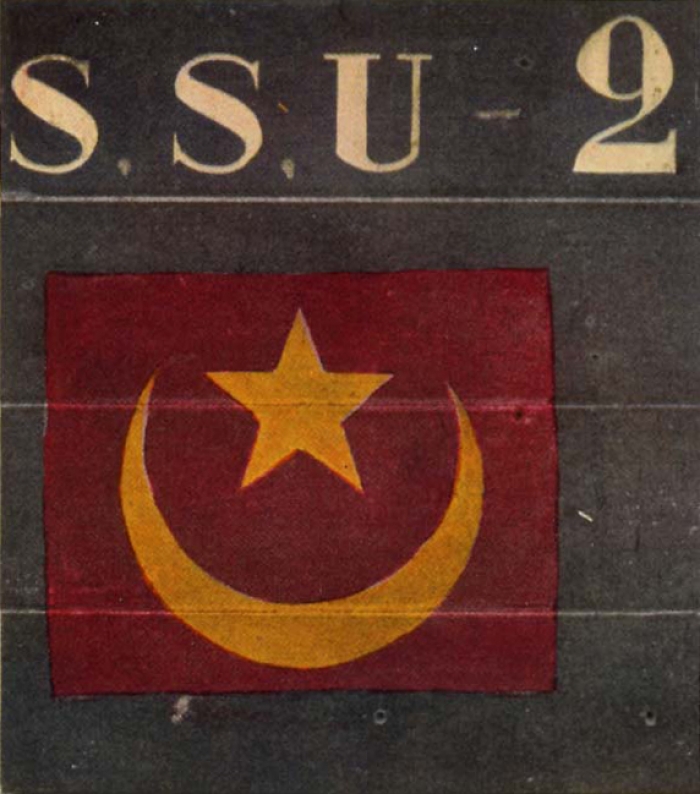
The Section was attached to the 73e Division d'Infanterie from April, 1915, to February, 1916; to the Hôpitaux de Monthairon, Vadelaincourt, Bar-le-Duc from February to September, 1916; to the 65e Division d'Infanterie from September,1916, to June, 1917; to the 73e Division d'Infanterie from June to August, 1917 and to the 48e Division d'Infanterie (Zouave) from August, 1917, to March, 1919.
* * *
SECTION TWO left Paris for Vittel, the headquarters of the French Army of the East, in the middle of April, 1915. It was almost immediately assigned to service in the region of Bois le Prêtre, being quartered first at Dieulouard, then at Pont-à-Mousson. It remained in this sector, which at that time was fairly active, for nearly ten months. In February of 1916, when the great battle of Verdun was imminent, it was moved to that sector, where it remained for more than a year and a half. It was first stationed in the hospital grounds at Le Petit Monthairon. In March the Section was attached to the rapidly growing hospital at Vadelaincourt; in June it moved for a month to Bar-le-Duc; on June 27th it returned to Le Petit Monthairon; on September 2 to Rampont, where it remained until November 8, leaving on that date for Ville-sur-Cousances; after two months of activity at this point, the Section was sent for repos to Glorieux near Verdun on January 10, 1917. On the 19th of the month the entire Section started for La Grange-aux-Bois; thence to Dombasle-en-Argonne on the 25th of June, and on July 30 for repos to Nançois-le-Grand. On August 16 the Section went on a three days' repos to Sommaisne. This was followed by a brief stay at Souhesme. It was on September 26 at Sivry-la-Perche that the Section enlisted in the American Army as Section Six-Twenty-Six.
'The Ambulance Sections', History of the American Field Service in France, "Friends of France" 1914-1917, Told by Its Members, Volume I (Boston and New York: Houghton and Mifflin Company, 1920)
SECTION TWO
Yet sought they neither recompense nor praise,
Nor to be mentioned in another breath
Than their blue-coated comrades whose great days
It was their pride to share, ay! share even to death.
Nay, rather, France, to you they rendered thanks
(Seeing they came for honor, not for gain),
Who, opening to them your glorious ranks,
Gave them that grand occasion to excel,
That chance to live the life most free from stain
And that rare privilege of dying well.
ALAN SEEGER
(From a poem written by him in memory of American Volunteers fallen for France, upon the occasion of a memorial service held before the Lafayette-Washington statue in Paris, May 30, 1916)
I
PONT-À-MOUSSON 1915
Pont-à-Mousson, August 1915
In August, 1915, we were quartered in a building which had not been occupied since August, 1914. There were countless rooms already furnished, while those on the first floor had been so cleaned up that the Section, which consisted of twenty-four men, had "all the comforts of home." There was a large mess-hall, kitchen, writing-room, library, general office, dormitory, and a good generous vaulted cellar of easy access. This last adjunct was important, for the town was one of the most frequently bombarded places in the line, and very often big shells that wreck a house at one shot made it advisable to take to the cave. The atelier of the armurier with its collection of tools and fixtures, now served as a perfect automobile repair shop. We had also running water, and, at first, enjoyed both gas and electric lights; but shells eventually put both systems out of commission. Naturally the telephone line got clipped every few days, but was quickly repaired. Behind the headquarters was a gem of a garden containing several species of roses, and, as fortune would have it, new wicker chairs. At first all this seemed too good to be true; we could not realize that such an amazing combination of comforts could exist in the war zone, and still less could we realize it when we looked down the street and saw the German trenches in full view on the crest of a hill fourteen hundred yards distant, where at night rifle flashes were seen. To the volunteers who had hibernated and drudged along at Beauvais some thirty-five kilometres behind the line until April, 1915, it was a realization of hopes beyond belief.
The men in the Section had been billeted in Dieulouard, eight kilometres below, at houses where they slept when not on night duty; but when the French Section was ordered away, a number of the men elected to move up to Pont-à-Mousson and were given excellent quarters in the various vacated residences of the town. Why, instead of just rooms they had suites, and the commander had an apartment in the show place of the town!
THE DAILY SERVICE
The regular daily service was arduous enough in itself, for one was either on duty or on call all of the time. Then there were periods following an attack when the men rested neither day nor night, when one got food only in snatches, and frequently days at a time would pass when one was on such continuous service that there was never a chance to undress. Then there was the other aspect, the ever-present danger of being killed or wounded that one is under at the front, for Section Two worked and lived in a heavily shelled area.
In spite of the danger, the American ambulanciers rendered their service with fidelity at any and all times. A French captain once remarked that, no matter how much the town was being shelled, our little field ambulances could be seen slipping down the streets, past corners, or across the square on their way to and from the postes de secours back of the trenches. I remember one day that was especially a test of the men. The town was being shelled, and it happened that at the same time there were many calls for cars. The Germans were paying particular attention to the immediate surroundings of our headquarters, and the shells were not falling according to any time-table known to us. A call came in, and the "next man" was handed his orders. He waited until a shell burst and then made a run for it. Several cars had been out on calls and were due to return. There was no way of giving them a warning. We heard the purr of a motor, and almost immediately the sing of a shell very close to us. There was an instant of anxiety, an explosion, and then we were relieved to see the car draw up in line, the driver switch off his motor and run for our entrance, holding his order card in front of him as he ran, and just as he entered another shell hit near by. It reminded me strongly of a scene in a "'ten-twenty-thirty" martial play. All the hero needed was some fuller's earth to pat off his shoulders when he came inside.
THE ROUTINE
It is difficult to take any one day's work and describe it in the attempt to give an adequate picture of the routine of the Section, for with us all days were so different.
Six-thirty is the time for bread and coffee, and the long table in the flag-decorated mess-room begins to fill. Mignot, our comrade orderly, is rushing to and fro placing bowls in front of those arriving, and practising on each the few English expressions he has picked up by association with us. Two men of the Section enter who look very tired. They throw their caps or fatigue hats on to a side table and call for Mignot. They have been on all-night service at a hamlet where the most active postes de secours are located.
"Much doing last night?" asks one of the crowd at the table.
"Not much. Had only sixteen altogether."
"Anything stirring?"
"Yes; Fritz eased in a few shrapnels about 5.30, but did n't hurt any one. You know the last house down on the right-hand side? Well, they smeared that with a shell during the night."
"By the way," continues the man in from night service, addressing himself to one across the table, "Canot, the artilleryman, was looking for you. Says he's got a ring for you made out of a Boche fuse-cap, and wants to know if you want a Geneva or Lorraine cross engraved on it."
The men in the Section leave the room one by one to take up their various duties. There are some whose duty it is to stay in reserve, and these go out to work on their cars. Others are on bureau service, and they remain within call of the telephone. Two leave for the town eight kilometres below, where their job is to evacuate from the two hospitals where the wounded have been carried down the day and night before.
FRIENDS AMONG THE FRENCHMEN
IN front of four or five of the low masonry houses a Red Cross flag is hung, designating the postes de secours where the wounded are bandaged and given to the ambulances. An American car is backed up in front of one, and the khaki-clad driver is the centre of interest for a group of soldiers. Some he knows well, and he is carrying on a cheerful conversation with them. It is surprising what a number of French soldiers speak English; and there are hundreds who have lived in England and in the States. Some are even American citizens who have returned to fight for la belle France, their mother-country. I have met waiters from the Café Lafayette, chefs from Fifth Avenue hotels, men who worked in New York and Chicago banks, in commission houses, who own farms in the West, and some who had taken up their residence in American cities to live on their incomes. It seems very funny to be greeted with a "Hello there, old scout!" by French soldiers.
"Well, when did you come over?" asks the driver.
"In August. Been through the whole thing."
"Where were you in the States?"
"New York; and I am going back there when it is over. Got to beat it now. So long. See you later."
A few companies of soldiers go leisurely past on their way up to the trenches, and nearly every man has something to say to the American driver. Five out of ten will point to the ambulance and cry out with questionable but certainly cheerful enough humor, "Save a place for me to-morrow," or, "Be sure and give me a quick ride!" Others yell our greetings, or air their knowledge of English. "Camarade américain," said in a very sincere tone and followed by a grip of the hand, has a very warm friendship about it. Yes, you make good friends that way. Working along together in this war brought men very close. You found some delightful chaps, and then ... well, sometimes you realized you had not seen a certain one for a week or so, and you inquire after him from a man in his company.
"Where is Bosker, or Busker? --- I don't know how you pronounce it. You know, tall fellow with corporal's galons who was always talking about what a good time he was going to have when he got back to Paris."
"He got killed in the attack two nights ago --- pauvre gars," is the answer....
NIGHT DUTY AND AN ADDED SECTOR
A kilometre up the climbing winding road was a lone poste de secours in the woods just off the highway. The approach and the place itself were often shelled. There were times when the drivers were under a seriously heavy fire on night duty; times when trees were shattered and fallen across the road and huge craters made in the soft earth of the adjacent fields. A kilometre beyond was another point of call, and from there one could look directly into one of the most fought-over sections of ground in the long line from the sea to Belfort. It is a bit of land that before the war was covered with a magnificent forest. Now it is a wilderness whose desolation is beyond description.
Section Two performed its duties so well that the work of an adjacent division was given to it, and the little cars began rolling past the last-mentioned poste de secours over to the exposed plain beyond and into the zone of its newly-acquired activities. The American cars literally infested the roads in the day. They buzzed along on calls to the postes, returned from evacuations, and kept so busy trying to accelerate the work that a casual observer might have imagined that a whole division had been annihilated overnight. There are times when men die in the ambulances before they reach the hospitals, and I believe nearly every driver in the Section has had at least one distressing experience of that sort. Early one morning there was an urgent call for a single wounded. The man's comrades gathered around the little car to bid their friend good-bye. He was terribly wounded and going fast. "See," said one of them to the man on the stretcher, "you are going in an American car. You will have a good trip, old fellow, and get well soon. Good-bye and good luck!" They forced a certain cheerfulness, but their voices were low and dry, for they saw death creeping into the face of their comrade. The driver took his seat and was starting when he was asked to wait. "Something for him," they said. When the car arrived at the hospital, the man was dead. He was cold and must have died at the start of the trip. The driver regretted the delay in leaving. Why had they asked him to wait? Then he saw that the ambulance was covered with sprigs of lilac and little yellow field flowers. The men knew that the car would serve as a hearse.
Americans have a faculty of adapting themselves to any service they may be called upon to perform, and many times we undertook on our own initiative various missions that were not in strict accord with our military duties. For instance, after a bombardment, we very often transported dead civilians. During one bombardment a considerable number of women and children were killed. A couple of the American ambulances were on the spot immediately after, and the men were silently going about their sad work. The little children who were accustomed to cry out to us as we passed, gathered around holding to their mothers' trembling hands. They said, "Américains," when they saw the khaki uniforms; but on this occasion their tone was hushed and sad instead of loud and joyous, and had a surprised note, as if they had not expected to see the Americans at such a task.
CURIOSITY AND PRUDENCE
It took us a long time to learn the value of prudence. At first during the bombardments we would rush to the street as soon as a shell landed and look to see what damage had been done. Then, when some éclats had sizzed uncomfortably close to our persons, we became a little more discreet and waited awhile before venturing out. But experience finally discounted the popularity of orchestra seats during an exhibition in which shells larger than "77's" appear.
The men did what was asked and gladly, for there was no work more worth while than helping in some way, no matter what, this noblest of all causes. One did not look for thanks, there was reward enough in the satisfaction the work gave; but the French did not let it stop at that. The men from the trenches were surprised that we had voluntarily undertaken such a hazardous occupation, and expressed their appreciation and gratitude with almost embarrassing frequency. "You render a great service," said the officers, and those of highest rank called to offer thanks in the name of France. It is good to feel that one's endeavors are appreciated, and encouraging to hear the words of praise; but when, at the end of an evacuation, one drew a stretcher from the car, and the poor wounded man lying upon it, who had never allowed a groan to escape during a ride that must have been painful, with an effort holds out his hand, grasps yours, and, forcing a smile, murmurs, "Merci, " --- that is what urged you to hurry back for other wounded, to be glad that there was a risk to one's self in helping them, and to feel grateful that you have had the opportunity to serve the brave French people in their sublime struggle.
EXTRACTS FROM McCONNELL'S JOURNAL
October 26, 1915
The head of the Sanitary Service of the French Government, accompanied by three generals, made a tour of inspection of all the units in this sector to-day.
November 14
We had the first snow of the season to-day. All the morning it snowed and covered the fields and trees with a thick coating of white. In the roads it melted and they became stretches of yellow slush.
November 16
We received a telephone message in the morning asking us to go to the mairie to meet a high official. Four of us went over. A number of large cars were drawn up in the place. One bore the flag of the President of France. We were to meet Poincaré. We formed a line inside the sandbag barricaded arcade. The President and his entourage passed. He stopped in front of us. "One finds you everywhere," he said; "you are indeed devoted." Then he shook hands with each of us and passed on. We wandered on down the arcade to watch the party go down into the shelled area of the town. A sentry standing near us entered into conversation. He addressed himself to Pottle. "Did he shake hands with you?" he asked. " Oh, yes," replied Pottle, who had taken the whole thing as a matter of course. "Bon Dieu! " said the sentry, "he is n't a bit proud, is he?"
November 25
Thanksgiving --- and we celebrated it in the American style. We had purchased and guarded the turkeys, and they were prime. One of our men did wonders with the army food, and it is doubtful if any finer Thanksgiving dinner was eaten any place in the world than the one we enjoyed to-day, only two thousand yards from the Huns.
November 30
The writer, with two others of the Section, was crossing the place after dark. As we passed the breach in the sandbag barricaded roads we were lighted up by the yellow glare coming from the shops next to the mairie. The sentry there on duty saw us. "Pass along, my children, and good luck to you; you are more devoted than we are," he cried out to us. I was startled by the voice out of the darkness and the surprising remarks. I glanced towards the sentry's post, but the light blinded me and I could not see him. From his voice, however, I knew he was old --- one of the aged territorials.
"Oh, no," I answered, for lack of anything better to say.
"Yes, you are. We all thank you. You are very devoted," he replied.
"No, not that, but I thank you," I said, and we were swallowed up in the darkness. Then I was sorry one of us hadn't gone back to shake hands with the kind-hearted old fellow. It seemed to me that it was the spirit of France speaking through him, voicing, as usual, her appreciation for any well-intentioned aid, and that we should have replied a little more formally.
JAMES R. McCONNELL*
*Of Carthage, North Carolina; University of Virginia; was in the Field Service during 1915; subsequently went into the Lafayette Flying Corps and was shot down near Ham, while on a reconnaissance during the Somme advance in July, 1916. The advancing troops found his body several days later.
II
PONT-À-MOUSSON --- BOIS LE PRÊTRE
Pont-à-Mousson, June 17, 1915
This is a dear little town with about eight thousand inhabitants. After breakfast I was asked by one of the men if I would like to look about. We turned to the left and entered the famous Bois le Prêtre where the artillery had not been. Here was an officers' cemetery, a terrible, sad sight, --- six hundred officers' graves. Close by were also the graves of eighteen hundred soldiers. The little cemetery was quite impressive on the side of this lovely green hill with the great trees all around and the little plain wood crosses at each grave. As we waited, a broken-down horse appeared with a cart-load of what looked like old clothes, but which was really des morts. I had never seen a dead body until that moment. It was a horrible awakening --- eight stiff, mangled, armless bodies --- all men like ourselves with people loving them somewhere, all gone this way. A grave had been dug two metres deep, large enough to hold sixteen. One by one they were lowered into the grave.
Pont-à-Mousson, Monday, June 28
I had to go to Auberge Saint-Pierre at about two o'clock this morning. It was a sad trip for me. A boy about nineteen had been hit in the chest and half his side had gone. " Très pressé," they told me. And as we lifted him into the car, by a little brick house which was a mass of shell-holes, he raised his sad, tired eyes to mine and tried a brave smile. I went down the hill as carefully as I could and very slowly, but when I arrived at the hospital, I found I had been driving a hearse and not an ambulance. It made me feel very badly --- the memory of that faint smile which was to prove the last effort of some dearly loved youth.
All the poor fellows look at us with the same expression of appreciation and thanks; and when they are unloaded it is a common thing to see a soldier, probably suffering the pain of the damned, make an effort to take the hand of the American helper. I tell you tears are pretty near sometimes.
Tuesday, 5 P.M., July 6
I carried over forty wounded yesterday a distance of a hundred and sixty kilometres and at nine o'clock turned in; to be waked up at two o'clock to go to Auberge Saint-Pierre. The Major was there to receive us, and so interested and appreciative is he that any one of us would do anything for him. Just as I was starting down with a full load I found I had picked up a nail, and a puncture was the order of the day. Two fellows ran forward; explained that in peace time they were chauffeurs, and refused to let me work on it; while the Major made me sit on a fallen tree by the roadside, smoke a cigarette, and talk to him. We are, of course, mere soldiers, but to be treated so kindly and so thoughtfully makes us feel that we must go on forever!
Later I had a German wounded couché given me and I probed out the fact that there were some six or eight French waiting to be taken. "Oh, but he is severely wounded --- take him first! " I shall always remember that in France the German went before the less wounded Frenchmen!
A TRIBUTE
Monday
The Governor, or Prefect, of the Department of Lorraine, sent us from Nancy, for July Fourth, the following tribute:
On this day, when you celebrate your national independence, at the same hour that France in violent combat defends her independence against an enemy whose madness for domination threatens the liberty of all nations, and whose barbarous methods menace civilization, I send you the expression of the profound friendship of the French for your great and generous nation; and seize this occasion to assure you once more of the deep gratitude of the people of Lorraine for the admirable devotion of all the members of the American Ambulance of Pont-à-Mousson.
Pont-à-Mousson, July 26
Our whole Section has been cited by order of the Division. Here is the translation:
The American Ambulance, composed of volunteers, friends of our country, has been continually conspicuous for the enthusiasm, courage, and zeal of all its members; who, regardles of danger, have worked without rest to save our wounded, whose affection and gratitude they have gained.
TWO TALES
Pont-à-Mousson, August 15
Yesterday was a red-letter day for me. The American mail arrived! I was brought back to actualities by the voice of a young French soldier of about twenty-one who stood beside me:
"You have just got some letters?"
"Yes, not even opened them yet."
"All those! You are to be married, perhaps?"
"No, mon ami."
" Surely it is your mother, then, who has written you so often."
"Only this one is from her," I answered. And then a strange silence fell. I did not feel like speaking, for, glancing up, I noticed that he was still looking at that one letter in my hand. Then, after fumbling for a few minutes in his uniform, he pulled out a packet of earth-stained letters, and said:
"These were from my mother; but I can't look for any more. She died last month."
September 4
A sad thing happened the other day to a friend of mine, a poilu who has been helping me to get specimens of perfect, empty shells. I had many a long talk with him. He used to like to tell me about his girl and how happy they were together before the war, and how the day peace was declared, he was going to marry her. Lately I had noticed he looked depressed, and one day I found out the reason. The postman came to the door. He looked at my friend, who had become silent, and shaking his head, said, "Pas encore." My friend became very white, and presently confessed to me that he had had no letters for six weeks. A few days after, I saw him again and asked if he had heard from her. He said "No," very sullenly, and later, over a glass of beer, mentioned that his father had written him that she had been misbehaving herself. The poor fellow seemed stunned with the news. After vainly trying to cheer him up, I went back to dinner. The next morning I did not see him, but the following morning I was at headquarters when an urgent call came for an ambulance. My car happened to be just going, so I took the trip. "Where is the house? " I asked. "Just over there where the man is waving." It was the house of my friend. Need I end the story? A broken man, who had worked valiantly for twelve months under hellish conditions, to defend his country, had shot himself! We lifted him on to a stretcher and I sped away. Life was nearly extinct. I followed him into the operating-room, where he opened his eyes, and I think he recognized me. His lips moved --- but I don't know.
THE SPIRIT OF THE FRENCH
September 8
Yesterday I had a sudden call to fetch three badly wounded, one of whom was in great pain from a wound in the back, and the slightest jostle or bump I knew would cause him great agony. The doctor, pointing to one of the other two, said, "You must get him to the operating-room as quickly as you can." "But," I answered, "I dare not go fast, this poor chap is in such a bad condition." The doctor shrugged his shoulders. But the man who was suffering had heard. "Go as fast as you can, my friend; it won't kill me!" I did so, and the bumps were bad. The poor fellow could not help uttering cries from time to time. But before I arrived at Belleville, the cries had ceased, as the great pain had made him unconscious, while the badly wounded man had died. "C'est la guerre," said the doctor to whom I told the story, as he washed his hands for the operations.
The other day I paid a visit to a neighboring hospital, where one young fellow about my own age had had his left leg amputated. I sat by his bed and chatted with him. He told me of his wife --- they had been a year and a half married --- and of his child whom he had not yet seen. He was so very eager that somehow the pity of it made me turn aside for a second, and look out of the window. Quick of perception, out went his hand to mine. Oh, she will understand, camarade," he said, smiling; she will love me just the same --- she is a Frenchwoman."
How can one help caring for France and French people, they have such a keen appreciation of the value of sympathy and gratitude? Here in the midst of torturing death, they at least are cheerful, and having put aside the barrier of selfishness are wholly simple and direct in their human relations. The fact that on every side there is daily evidence of this attitude, in spite of so bitter and costly a struggle, is high proof of the fineness of their civilization.
LESLIE BUSWELL*
*A young Englishman, who was in the service during several months of 1915. Author of Ambulance No. 10.
III
A NIGHT OF SHELLING
Pont-à-Mousson, May 20, 1915
One evening, about 7.30, after the Germans had been firing on this place and the neighboring villages for some hours, I was called to Bozéville, a village on the road to Montauville consisting of a small cluster of one-story brick and frame buildings constructed in 1870 by the Germans for their soldiers. When I reached this place it was on fire, and the Germans, by a constant fusillade of shrapnel shells in and around the buildings and on the roads near them, were preventing any attempt being made to extinguish the fire. To drive up the narrow road, with the burning houses on one side and high garden wall, thank Heaven, on the other, hearing every few seconds the swish-bang of the shells, was decidedly nervous work and anything but peaceful. But after picking up the wounded, I returned here where conditions were much worse. At this time the Germans were throwing shells of large calibre at the bridge over the Moselle, and to reach the hospital to which I was bound, it was necessary to take the road which led to this bridge and turn to the left about a hundred yards before coming to it. Just as I was about to make this turn, two shells struck and exploded in the river under the bridge. There was a terrific roar and two huge columns of water rose into the air, seemed to stand there for some seconds and the next instant spray and bits of wood and shell fell on and around us. A minute later I turned into the hospital yard, where the effect, in the uncertain and fast-fading light, was ghostly, as earlier in the evening a shell had exploded in the yard and thrown an even layer of fine, power-like dust over everything. It resembled a shroud in effect, for nothing disturbed its even surface except the crater-like hole made by the shell. On one side of the yard was the hospital, every window broken and its walls scarred by the pieces of shells; in the middle was the shell-hole, and on the other side was the body of a dead brancardier, lying on his back with a blanket thrown over him, which gave a particularly ghastly effect to the scene, for what was left of the daylight was just sufficient to gleam upon his bald forehead and throw into relief a thin streak of blood which ran across his head to the ground. Needless to say I left the place as quickly as possible.
TO THE VICTOR BELONG THE SPOILS
Another scene which I do not think I will soon forget happened just after a successful French attack and shows war in a little different light, with more of the excitement and glory which are supposed to be attached to battle. It occurred at Montauville, a straggly little village of one and two-story stone and plaster houses built on the two sides of the road, situated on a saddle which connects one large hill on one side of it with another large hill on the other side of it. The village is used as a dépôt and resting-place for the troops near it. On this particular day the French had attacked and finally taken a position which they wanted badly, and at this time, just after sunset, the battle had ceased and the wounded were being brought into the poste de secours. The tints of the western sky faded away to a cloudless blue heaven, marked here and there by a tiny star. To the south an aeroplane was circling like a huge hawk with puffs of orange-tinted shrapnel smoke on all sides of it. In the village the soldiers were all in the streets or hanging out of the windows shouting to one another. The spirits of every one were high, and they well might be, for the French had obtained an advantage over the Germans and had succeeded in holding it. At this moment a French sergeant entered the town at the lower end and walked up the street. At first no one noticed him; then a slight cheer began, and before the man had advanced a hundred yards the soldiers had formed a lane through which he strode. He was a big fellow, his face smeared with blood and dirt and his left arm held in a bloody sling, while on his head was a German helmet with its glinting brass point and eagle. He swaggered nearly the entire length of the village through the shouting line of soldiers, gesticulating with his one well arm and giving as he went a lively account of what had happened. Thereupon some one started the Marseillaise and in a few minutes all were singing. I have heard football crowds sing after a victory and other crowds indulge in song, but I have never listened to such wild exultation as on this occasion. It was tremendous. I wish the Germans could have heard it. Perhaps they did, for they were not so far away and the sound seemed to linger and echo among the hills for some minutes after the last note had been struck.
CARLYLE H. HOLT*
*Of Hingham, Massachusetts; Harvard, '12. Served in Section Two from February to August of 1915.The above are extracts from two letters written to Field Service Headquarters.
IV
LEAVING PONT-À-MOUSSON
It gave us rather a wrench to leave Pont-à-Mousson. The Section had been quartered there since April, 1915, and we were attached to the quaint town and to the friends we had made there. The morning of our departure was warm and clear. Walking along the convoy which had been formed in the road before our villa, came the poilus who shook hands with each conducteur. "Au revoir, Monsieur." "Au revoir, Paul." "Bonne chance, Pierre." We took a last look at the town which had sheltered us during the most dramatic moments of our lives.
Above the tragic silhouette of a huddle of ruined houses rose the grassy slopes of the great ridge crowned by the Bois le Prêtre, the rosy morning mists were lifting from the shell-shattered trees, and a golden sun poured down a springlike radiance. Suddenly a great cloud of grayish white smoke rose over the haggard wood and melted slowly away in the northeast wind; an instant later, a reverberating boom signalled the explosion of a mine in the trenches. There was a shrill whistle, our lieutenant raised his hand, and the convoy swung down the road to Dieulouard. "Au revoir, les Américains!" cried our friends --- a little mud-slopped, blue-helmeted handful, that waved to us till we turned the corner. "Au revoir, les Américains !"
Late in the afternoon we were assigned quarters in the barracks of Bar-le-Duc, where we found an English Section that had been as suddenly displaced as our own. Every minute loaded camions ground into town and disappeared towards the east, troops of all kinds came in, flick, flack, the sun shining on the barrels of the lebels, a train of giant mortars, mounted on titanic trucks and drawn by big motor lorries, crashed over the pavements and vanished somewhere. Some of our conducteurs made friends with the English drivers, and swapped opinions as to what was in the wind. One heard, "Well, those Frenchies have got something up their sleeve. We were in the battle of Champarng, and it began just like this." Round us, rising to the full sea of the battle, the tide of war surged and disappeared. At dusk a company of dragoons, big helmeted men on big horses, trotted by, their blue mantles and mediaeval casques giving them the air of crusaders. At night the important corners of the streets were lit with cloth transparencies, with "Verdun" and a great black arrow painted on them. Night and day, going as smoothly as if they were linked by an invisible chain, went the hundred convoys of motor lorries. There was a sense of something great in the air --- a sense of apprehension. "Les Boches vont attaquer Verdun."
TO PETIT-MONTHAIRON --- NEAR VERDUN
On the 21st the order came for us to go to Petit-Monthairon (the Boches had made their first attack that morning, though this we did not then know), and near by we found a rather unlovely eighteenth-century château standing in a park built out on the meadows of the Meuse. The flooded river flowed round the dark pines, and at night one could hear the water roaring under the bridges. The château, which had been a hospital since the beginning of the war, reeked with ether and iodoform; pasty-faced, tired attendants unloaded mud, cloth, bandages, and blood that turned out to be human beings; an overwrought Médecin Chef screamed contradictory orders at everybody and flared into crises of hysterical rage.
Ambulance after ambulance came from the lines full of clients; kindly hands pulled out the stretchers and bore them to the wash-room, which was in the cellar of the dove-cote, in a kind of salt-shaker turret. Snip, snap went the scissors of the brancardiers who looked after the bath, --- good souls these two --- who slit the uniforms from mangled limbs. The wounded lay naked in their stretchers while the attendant daubed them with a hot soapy sponge and the blood ran from their wounds through the stretcher to the floor and seeped into the cracks of the stones. A lean, bearded man closed his eyes over the agony of his opened entrails and died there. Somebody casually tossed a blanket over the body.
Outside, mingling with the roaring of the river, came the great, terrible drumming of the bombardment. An endless file of troops were passing down the great road. Night. came on. Our ambulances were in a little side street at right angles to the great road, their lamp flares beating fiercely on a little section of the great highway. Suddenly, plunging out of the darkness into the intense radiance of the acetylene beams, came a battery of "75's," the helmeted men leaning over on the horses, the guns rattling and the harness clanking, a swift picture of movement that plunged again into darkness. And with darkness, the whole horizon became brilliant with cannon fire.
"THE HORSESHOE OF FIRE"
We were well within the horseshoe of German fire that surrounded the French lines. It was between midnight and one o'clock, the sky deep and clear, with big ice-blue winter stars. We halted at a certain road to wait our chance to deliver our wounded. It was a melee of beams of light, of voices, of obscure motions, sounds. Refugees went by, decent people in black, the women being escorted by a soldier. One saw sad, harassed faces. A woman came out of the turmoil carrying a cat in a canary cage; the animal swept the gilded bars with curved claws, and its eyes shone black and crazily. Others went by pushing baby carriages full to the brim with knickknacks and packages. Some trundled a kind of barrow. At the very edge of earth and sky-was a sort of violet-white inferno, while the thousand finger-like jabs of the artillery shot unceasing to the stars, and the great semi-circular aureole flares of the shorter pieces were seen a hundred times a minute. Over the moorland came a terrible roaring such as a river might make tumbling through some subterranean abyss. A few miles below, a dull ruddy smouldering in the sky told of fires in Verdun. The morning clouded over, the dawn brought snow. Even in the daytime the great cannon flashes could be seen in the low, brownish snow-clouds.
On the way to Monthairon, two horses that had died of exhaustion lay in a frozen ditch. Ravens, driven from their repast by the storm, cawed hungrily in the trees.
We slept in the loft of one of the buildings that formed the left wing of the courtyard of the castle. To enter it, we had to pass through a kind of lumber-room on the ground floor in which the hospital coffins were kept. Above was a great dim loft, rich in a greasy, stably smell, a smell of horses and sweaty leather, the odor of a dirty harness room. At the end of the room, on a kind of raised platform, which ran along the wall over our heads, was the straw in which we lay --- a crazy, sagging shelf, covered with oily dust, bundles of clothes, knapsacks, books, candle-ends, and steel helmets. All night long the horses underneath us squealed, pounded, and kicked.
I see in the lilac dawn of a winter morning the yellow light of an officer's lantern, and hear the call, "Up, boys, there's a call to Bar-le-Duc." The bundles in the dirty blankets groan; unshaven, unwashed faces turn tired eyes to the lantern; some, completely worn out, lie in a kind of sleepy stupor, while a wicked screaming whistle passes over our heads, and the shell, bursting on a near-by location, startles the dawn.
Later, the back of the attack was broken, and we began to get a little rest. But during the first week our cars averaged runs of two hundred miles a day, over roads chewed to pieces, and through very difficult traffic. In several of the villages there were unusually formidable shell gauntlets to be run.
LONELINESS --- THE VOICE OF THE SHELL
It is night. You can imagine how lonely it is here under the black, star-swept sky, the houses only masses of regular blackness in the darkness, the street silent as a dune in the desert and devoid of any sign of human life. Muffled and heavy, the explosion of a torpedo inscribes its solitary half-note on the blank lines of the night's stillness. I go up to my room, and sigh with relief as my sulphur match boils blue and breaks into a short-lived yellow flame. Shadows are born, leaping and rising, and I move swiftly towards my candle-end, the flame catches and burns straight and still in the cold, silent room. The people who lived here were very religious; an ivory Christ on an ebony crucifix hangs over the door, and solemn-eyed, the pure and lovely head of Jeanne d'Arc stands on my mantel. What a marvellous history, hers! I think it the most beautiful mystic tale in our human annals.
Silence, sleep, the crowning mercy. A few hours go by and morning comes. There is a call, "Monsieur Shin, --- un couché à --- " I wake. The night clerk of the bureau is standing in the doorway. An electric flashlight in his hand sets me a-blinking. I dress, shivering a bit, and am soon on my way. The little gray machine goes cautiously on in the darkness, bumping over shell-holes, guided by the iridescent mud of the last day's rain. A bright flash illuminates the road. A shell sizzles overhead. I reach the poste de secours and find a soldier in the roadway. More electric hand-lamps. Down a path comes a stretcher and a man wounded in arm and thigh. We put him into the voiture, cover him up, and away I start on my long, dark ride to the hospital, a lonely nerve-tightening ride.
The voice of war is the voice of the shell. You hear a perfectly horrible sound as if the sky were made of cloth and the Devil were tearing it apart, a screaming undulating sound followed by an explosion of fearful violence, bang! The violence of the affair is what impresses you, the suddenly released energy of that murderous burst.
When I was a child I used to wander around the shore and pick up hermit crabs and put them on a plate. After a little while you would see a very prudent claw come out of the shell, then two beady eyes, finally the crab in propria persona. I was reminded of that scene on seeing people come cautiously out of their houses after a shell had fallen, peeping carefully out of doorways, and only venturing to emerge after a long reconnoitring.
THE RELIGION OF THE TRENCHES
A new religion has arisen in the trenches, a faith much more akin to Mahomet than to Christ. It is a fatalism of action. The soldier finds his salvation in the belief that nothing will happen to him until his hour comes, and the logical corollary of this belief --- that it does no good to worry --- is his rock of ages. It is a curious thing to see poilus --- peasants, artisans, scholars --- completely in the grip of this philosophy. The real religion of the front is the philosophy of Mahomet. Death has been decided by Fate, and the Boches are the unbelievers. After all, Islam in its great days was a virile faith, the faith of a race of soldiers.
A LETTER FROM VERDUN
The other day I climbed to the top of Vauban's citadel, and looked out over the forts, the buff-brown moorlands and the crumbling villages. To the west, a battle was taking place, dull-colored smoke lay close to the ground, and now and then a shell would break, a pin point of light, in the upper fringes of the haze. What in Heaven's name is to be the end of all this? What is the world to be like which will some day follow this cruel welter of savagery and pain? You know that I reject the pacifist case because I see war as part of the web of life; it is competition distilled to its ultimate essence, and will not be done away with until international competition is under some rigorous and centralized control. Yet how can such a despotism of power be established, and by whom? Certainly war cannot be eliminated from the mechanism of civilization by a folding of hands and a general promise to be good. Yet this sort of thing is civilization committing suicide. Is n't it appalling to think of France, "the land of the idea," being thus compelled to abandon her science and art and to waste her blood and treasure in this unspeakable massacre? We ought all of us, young Boches, too, to be fighting side by side in the endless war men must wage on the various cussednesses of nature. This cheerless life is acid to any one with memories of an old, beloved New England hearth and close family ties and friendships. To half jest, I am enduring war for peace of mind.
How lonely my old house must be when the winter storms surge round it at midnight. How the great flakes must swirl about its ancient chimney, and fall softly down the black throat of the fireplace to the dark, ungarnished hearth. The goblin who polished the pewter plates in the light of the crumbling fire-brands has gone to live with his brother in a hollow tree on the hill. But when you come to Topsfield, the goblin himself, red flannel cap and all, will open the door to you as the house's most honored and welcome guest.
A fusée éclairante has just run over the wood, the "Bois de la mort," the wood of the hundred thousand dead; and side by side with the dead are the living, the soldiers of the army of France, holding through bitter cold and a ceaseless shower of iron and hell, the far-stretching lines. If there is anything I am proud of, it is of having been with the French Army, the most devoted and heroic of the war.
HENRY SHEAHAN*
*Of Topsfield, Massachusetts; Harvard, '09; served from August, 1915, to April, 1916; author of A Volunteer Poilu.
V
EN ROUTE --- 1916
Section Two left Pont-à-Mousson about February 21, 1916, and on Washington's Birthday our French Lieutenant gave us our "order to move"; but all he could tell us about our destination was that we were going north. We started from Bar-le-Duc, where we had spent a few days overhauling and painting the cars, about noon, and it took six hours to make forty miles through roads covered with snow, swarming with troops, and all but blocked by convoys of food carts and sections of trucks. Of course we knew that there was an attack in the neighborhood of Verdun, but we did not know who was making it or how it was going. Then about four o'clock in the short winter twilight we passed two or three regiments of French colonial troops on the march with all their field equipment. They were lined up on each side of the road around their soup kitchens, which were smoking busily, and I had a good look at them as we drove along. It was the first time that I had seen an African Army in the field, and though they had a long march, they were cheerful and in high spirits at the prospect of battle. They were all young, active men, of all colors and complexions, from blue-eyed blonds to shiny blacks, and wore khaki, and brown shrapnel casques.
After that we rode north along the Meuse, through a beautiful country where the snow-covered hills, with their sky-lines of carefully pruned French trees, made me think of masterpieces of Japanese art. In the many little villages there was much excitement and activity --- troops, artillery, and munitions being rushed through to the front, and there were also the consequent wild rumors of great attacks and victories. Curiously enough, there were few who thought of defeat, all sure, even when a retreat was reported that the French were winning; and that spirit of confidence had much to do with stopping the German advance.
At about six in the evening we reached our destination, some forty miles northeast of Bar-le-Duc. The little village, Petit-Monthairon, where we stopped had been a railroad centre until the day before, when the Germans started bombarding it. Now the town was evacuated, and the smoking station deserted. The place had ceased to exist, except for a hospital which was established on the southern edge of the town in a lovely old château, overlooking the Meuse, whither we were called as soon as we arrived to take such wounded as could be moved to the nearest available railhead, ten miles away, on the main road, and four miles south of Verdun. We started out in convoy; but with the conditions of traffic, it was impossible to stick together, and it took some of us till five o'clock the next morning to make the trip. That was the beginning of the attack for us, and the work of evacuating the wounded to the railway stations went steadily on until March 15, during which period it was left to the driver to decide how many trips it was physically possible for him to make in each twenty-four hours, for there were more wounded than could be carried, and no one could be certain of keeping any kind of schedule with the roads as they were then.
THE ROADS ABOUT VERDUN
Sometimes we spent five or six hours waiting at a crossroad, while columns of troops and their equipment filed steadily by. Sometimes at night we could make a trip in two hours that had taken us ten in daylight. Sometimes, too, we crawled slowly to a station only to find it deserted, shells falling, and the hospital removed to some still more distant point of the line. Situations and conditions changed from day to day, --- almost from hour to hour. One day it was sunshine and spring, with roads six inches deep in mud, no traffic and nothing to remind one of war, except the wounded in the car and the distant roar of the guns, which sounded like a giant beating a carpet. The next day, it was winter again, with mud changed to ice, the roads blocked with troops, and the Germans turning hell loose with their heavy guns.
In such a crisis as those first days around Verdun, ammunition and fresh men are the all-essential things. The wounded are the déchets, the "has-beens," and so must take the second place. But the French are too gallant and tender-hearted not to make sacrifices. For instance, I remember one morning I was slapped off the road into the ditch, with a broken axle, while passing a solitary camion, whereupon the driver got down, came over and apologized for the accident which was easily half my fault. Then we unloaded four cases of "seventy-five" shells that he was carrying, put my three wounded on the floor of his car, and he set out slowly and carefully up the ice-covered road, saying to me with a smile as he left, "Don't let the Boches get my marmites while I'm gone." For some time I sat there alone on the road, watching the shells break on a hill some miles away to the north, and wondering when I could get word of my mishap back to the base. Then a staff car appeared down the highway, making its way along slowly and with difficulty, because, being without chains, it skidded humorously, with engine racing and the chauffeur trying vainly to steer. There was a Captain of the Service des Autos sitting on the front seat, who was so immaculately clean and well-groomed that he seemed far away from work of any kind. But when the car stopped completely about halfway up the little hill on which I was broken down, he jumped out, took off his fur coat, and using it to give the rear wheels a grip on the ice, he swung it under the car. As the wheels passed over it, he picked it up and swung it under again. So the car climbed the hill and slid down the other slope round the curve and out of sight. It was just another incident that made me realize the spirit and energy of the French Automobile Service.
But the Captain had not solved any of my difficulties. He had been too busy with his own to notice me or wonder why an American ambulance was sprawled in a ditch with four cases of shells alongside. So I waited there about two hours until an American came by and took back word of my accident and of the parts necessary to set it right. In the meantime, about noon, my friend came back in his camion to take up his cases of shells and reported my wounded safe at the railway station. We lunched together on the front seat of the camion, bread, tinned "monkey meat," and red wine, while he told me stories about his life as a driver.
As soon as we had finished lunch he left me, and I waited for another two hours until the American staff car (in other surroundings I should call it an ordinary Ford touring-car with a red cross or so added) came along loaded with an extra "rear construction," and driven by the Chief himself. It took us another four hours to remove my battered rear axle and put in the new parts; but my car was back in service by midnight.
This was a typical instance of the kind of accident that was happening, and there were about three "Ford casualities" every day. But thanks to the simplicity of the mechanism, and to the fact that, with the necessary spare parts, the most serious indisposition can be remedied in a few hours, our Section was at the front for a year --- ten months in the Bois le Prêtre, and two months at Verdun --- without being sent back out of service for general repairs. In the Bois le Prêtre we had carried the wounded from the dressing-stations to the first hospital, while at Verdun we were on service from the hospital to the railheads. In this latter work of evacuation the trips were much longer, thirty to ninety miles; so the strain on the cars was correspondingly greater. As our cars, being small and fast, carried only three wounded on stretchers or five seated, our relative efficiency was low in comparison with the wear and tear of the "running gear" and the amount of oil and petrol used. But in the period from February 22 to March 13, twenty days, with an average of eighteen cars working, we carried 2046 wounded 18,915 miles. This would be no record on good open roads, but with the conditions I have described I think it justified the existence of our volunteer organization, --- if it needed justification. Certainly the French thought so; but they are too generous to be good judges.
Except for our experiences on the road, there was little romance in the daily routine. True, we were under shellfire, and had to sleep in our cars or in a much-inhabited hayloft, and eat in a little inn, half farmhouse and half stable, where the food was none too good and the cooking none too clean. But we all realized that the men in the trenches would have made of such conditions a luxurious paradise; so that kept us from thinking of it as anything more than a rather strenuous "camping out."
FRANK HOYT GAILOR*
*Of Memphis, Tennessee; Sewanee and Columbia Universities; spent parts of 1915 and 1916 in the Service. Later served as First Lieutenant in the American Field Artillery.